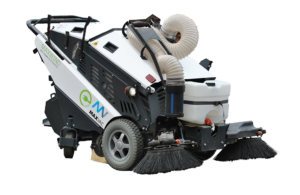
Industrial Sweepers: The Complete Guide to Keeping Your Facility Clean & Efficient
Cleanliness isn’t just about appearances—it’s essential for health, safety, productivity, and regulatory compliance. Whether you’re managing a warehouse, manufacturing plant, distribution centre, or outdoor logistics yard, having the right industrial floor cleaning equipment is critical which is why we lead the way in providing industrial sweepers to all kinds of businesses including yours.
Where Can Industrial Sweepers Be Used?
Indoor Areas
- Warehouses & distribution centers
- Production floors & workshops
- Aircraft hangars
- Shopping malls & exhibition centers
- Underground car parks
Outdoor Areas
- Loading bays & lorry parks
- Access roads & paved yards
- Petrol stations
- Industrial estates
- Ports & construction sites
What Does an Industrial Sweeper Do?
Industrial sweepers are designed to collect dust, debris, litter, leaves, packaging waste, metal shavings, and other dry or light moist materials. They’re faster, more effective, and more ergonomic than manual sweeping, and they reduce airborne dust—a major benefit in indoor environments.
Pedestrian Sweepers vs. Ride-On Sweepers
Choosing between pedestrian and ride-on sweepers depends on the size of your facility and intensity of use.
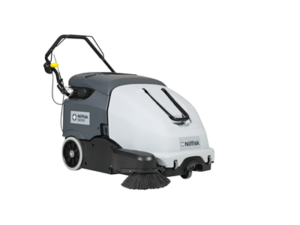
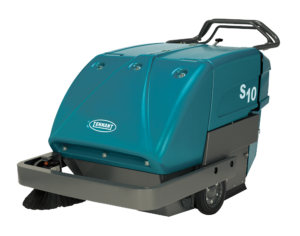
Pedestrian (Walk-Behind) Sweepers
Best for: Small to medium areas with narrow aisles and frequent obstacles.
Pros:
- Lower purchase cost
- Easy to store and maneuver
- Ideal for tight indoor spaces
- Quiet and lightweight
- Usually battery-powered (zero emissions)
Cons:
- Slower productivity rate
- May not suit heavy-duty or large outdoor areas
Ride-On Sweepers
Best for: Large indoor facilities and extensive outdoor spaces.
Pros:
- Much faster coverage
- Suitable for heavy-duty use
- Comfortable for long shifts
- Available with higher hopper capacity
Cons:
- Higher initial cost
- Requires more storage space
- May need trained operators
Battery vs. Engine-Powered Sweepers
Another key consideration is power source. Here’s how the two compare:
Battery-Powered Sweepers
Ideal for: Indoor use, clean air environments, and noise-sensitive zones
Pros:
- Emission-free operation
- Low noise levels
- Less maintenance
- Lower energy costs
- Great for LEZs and indoor air quality
Cons:
- Limited runtime (typically 2–5 hours)
- Requires charging downtime or backup batteries
Engine-Powered Sweepers (Diesel, Petrol, LPG)
Ideal for: Outdoor and heavy industrial use
Pros:
- High runtime and power
- Can handle large debris and rugged terrain
- No need for charging infrastructure
Cons:
- Less suitable indoors (emissions)
- Louder operation
- Higher fuel and maintenance costs
What About Scrubber-Dryers?
Industrial scrubber-dryers take cleaning to the next level. After sweeping the area to remove debris and dust, they wash and dry hard floors in a single pass.
What Scrubbers Do:
- Dispense water and detergent
- Mechanically scrub the floor with rotating brushes or pads
- Vacuum up dirty water into a recovery tank
Perfect for:
- Food production areas
- Hospitals & cleanrooms
- Supermarkets & retail stores
- Smooth factory floors
Dryers (or “squeegees”) remove the water after scrubbing, leaving the floor dry and safe almost immediately.
Combination Machines: The Best of Both Worlds
Some advanced cleaning units combine sweeping and scrubbing functions—called combi-machines or sweep-and-scrub models.
Ideal for:
- Large logistics warehouses
- Transit depots
- Multi-surface areas (indoor/outdoor)
- Facilities that must remain clean and dry 24/7
Pros:
- One-pass efficiency
- Saves labor and time
- Versatile cleaning for multiple surfaces
Cons:
- Expensive upfront
- Larger footprint may not suit tight spaces
Summary Table: Choosing the Right Industrial Cleaning Machine
| Need | Recommended Equipment |
|---|---|
| Small, indoor area | Pedestrian battery sweeper |
| Large warehouse | Ride-on battery sweeper |
| Outdoor yard with heavy debris | Ride-on engine sweeper |
| Spills and hygiene-sensitive zones | Scrubber-dryer (battery) |
| Mixed debris + grease | Combination sweeper-scrubber |
Industrial Sweeper and Cleaning Machine Selection
Choosing the right industrial floor sweeper, scrubber or combination machine can drastically improve your cleaning efficiency, air quality, safety compliance, and overall appearance. When assessing your options, consider:
- The size and layout of the area
- Type of debris or spills
- Indoor vs. outdoor usage
- Environmental and noise considerations
- Runtime and maintenance needs
Pedestrian vs. ride-on? Battery vs. engine? Sweeper vs. scrubber? The best choice depends on your specific operation—but one thing’s clear: the right machine will pay for itself in saved labour, improved safety, and faster cleaning.
Ride-On Industrial Floor Sweepers
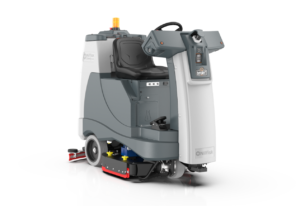
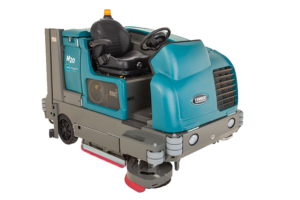
Designed for larger areas, ride-on scrubbers increase productivity and reduce operator fatigue.
Ride-On Models include:
| Model | Cleaning Path | Solution Tank | Recovery Tank | Down Pressure | Run Time | Noise Level | Head Type |
|---|---|---|---|---|---|---|---|
| T7 | 650–850 mm | 110 L | 110 L | Up to 91 kg | Up to 3.5 hours | As low as 67 dBA | Disk, Cylindrical |
| T12 | 800–1040 mm | 132 L | 166 L | Up to 114 kg | Up to 4.5 hours | As low as 62 dBA | Disk, Cylindrical |
| T16 | 910–1145 mm | 190 L | 225 L | Up to 114 kg | Up to 4 hours | As low as 68 dBA | Disk, Cylindrical |
| T17 | 1015–1320 mm | 285 L | 285 L | Up to 250 kg | Up to 7 hours | As low as 65 dBA | Disk, Cylindrical |
| T20 | 1020–1420 mm | 303 L | 303 L | Up to 250 kg | Up to 5 hours | As low as 84 dBA | Disk, Cylindrical |
| T1581 | 984–1049 mm | 218 L | 237 L | Up to 116 kg | Up to 5 hours | As low as 77 dBA | Disk, Cylindrical |
| M17 | 1020–1420 mm | 285 L | 346 L | Up to 250 kg | Up to 5 hours | As low as 84 dBA | Disk, Cylindrical |
| M20 | 1020–1420 mm | 212 L | 276 L | Up to 250 kg | Up to 5 hours | As low as 84 dBA | Disk, Cylindrical |
| M30 | 1020–1420 mm | 284 L | 360 L | Up to 250 kg | Up to 5 hours | As low as 84 dBA | Disk, Cylindrical |
| 6100 | 610 mm | 83 L | 83 L | Up to 45 kg | Up to 3 hours | As low as 70 dBA | Cylindrical |
Looking for other floor cleaners? View our industrial floor cleaning page here.