Road Investment Strategy 3: A New Direction for UK Roads

Understanding Road Investment Strategy 3
Road Investment Strategy 3 (RIS3) is the UK Government’s third long term framework for managing and funding England’s Strategic Road Network (SRN). It covers the period from 2026 to 2031 and is developed under the Infrastructure Act 2015. RIS3 sets out how the Government, through the Department for Transport and delivered by National Highways, will invest in, maintain, and improve the country’s most important roads.
The SRN includes around 4,500 miles of motorways and major A roads. Although it represents only a small proportion of the total road network, it carries a significant share of national traffic, including most freight movements. It plays a vital role in connecting regions, supporting economic activity, and enabling the movement of people and goods across the country.
RIS3 builds on the foundations of RIS1 and RIS2 but reflects a changing landscape. With more than £27 billion committed, the strategy places greater emphasis on maintaining and renewing the existing network rather than expanding it. The aim is to ensure that the SRN remains safe, reliable, and fit for the future while responding to growing pressures and evolving user expectations.
A Network Under Pressure: Why RIS3 Is Needed
The case for Road Investment Strategy 3 is shaped by increasing strain on the Strategic Road Network. Demand for road travel is expected to grow steadily, with vehicle mileage projected to rise by around 10 percent by 2035. This growth brings challenges such as congestion, reduced journey reliability, and potential impacts on economic productivity.
Much of the network is also ageing. A significant proportion of structures and road surfaces are now operating beyond their original design life. This increases the need for ongoing maintenance and raises the risk of failures if issues are not properly managed.
Climate change adds further pressure. More frequent extreme weather events, including heavy rainfall and heatwaves, are accelerating wear and tear, disrupting maintenance activities, and creating new risks for network performance and safety.
Expectations from users and stakeholders are also evolving. Road users want smoother journeys, better managed roadworks, and more reliable travel times. Businesses depend on consistent and predictable routes, particularly for freight and logistics. Communities are increasingly focused on environmental impacts such as noise, air quality, and carbon emissions.
These combined pressures highlight a clear reality. The challenge is no longer simply about increasing capacity. It is about ensuring that the network can operate reliably, adapt to changing conditions, and continue to deliver value in a complex and demanding environment.
The RIS3 Shift Toward Maintenance Led Delivery
A defining feature of Road Investment Strategy 3 is its shift toward maintenance led delivery. While previous road periods placed greater emphasis on large scale enhancement projects, RIS3 prioritises the upkeep, renewal, and resilience of the existing network.
This shift reflects both practical necessity and stakeholder feedback. Consultation responses showed strong support for focusing on maintaining and improving current infrastructure rather than pursuing extensive new roadbuilding. Road users consistently identified the following as top priorities:
- Better road surface quality
- Reduced disruption from works
- More reliable journey times
As a result, a substantial portion of RIS3 funding, totalling £8.4 billion, is dedicated to renewals. This includes resurfacing roads, repairing and replacing ageing structures, and addressing critical areas approaching end of life. Preventative maintenance is central to this approach, with a focus on early intervention to avoid more serious deterioration.
Planned maintenance offers clear advantages. It reduces the need for emergency repairs, minimises unplanned closures, and improves overall efficiency. It also enables better coordination of works, helping to limit disruption for road users and freight operators.
Targeted enhancements remain part of the strategy. Investments will still be made to address key congestion points and improve capacity where needed. However, these enhancements now sit within a more balanced approach that prioritises long term performance and resilience.
Risks and Challenges for RIS3 Delivery
Although RIS3 provides a clear framework for investment and delivery, the Strategic Road Network continues to face several risks that must be managed proactively to maintain safety, reliability, and resilience.
Safety and Operational Risks
Unplanned incidents such as collisions or breakdowns can create significant delays and operational challenges. Maintenance activities also carry inherent risks, especially in high speed or high volume environments. Meeting RIS3 safety targets depends on strong coordination, monitoring, and the strategic use of flexible assets.
Supply Chain and Resource Constraints
Delivery relies on the availability of specialist equipment, skilled operators, and timely materials. Supply chain disruption, whether from shortages or cost pressures, can affect both planned works and emergency responses. A smarter asset strategy helps mitigate these risks by ensuring access to versatile equipment and flexible deployment options.
Technological and Regulatory Change
The transition to zero emission vehicles, adoption of new materials, and integration of emerging technologies introduce both opportunities and uncertainties. Innovation can improve efficiency, but it requires investment and adaptation. Evolving environmental and safety regulations also add complexity that must be incorporated into planning.
Effectively managing these risks is central to the success of Road Investment Strategy 3. By anticipating pressures and deploying flexible assets strategically, the network can remain safe, resilient, and reliable even as demands and conditions continue to change.
Why Asset Flexibility Is Critical for RIS3 Success
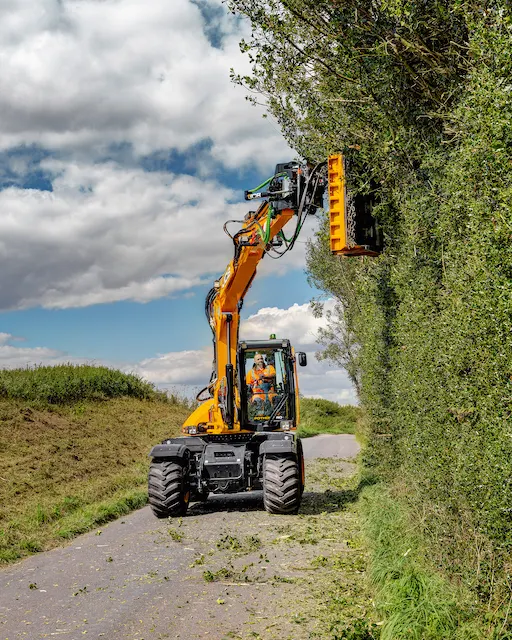
As demands on the Strategic Road Network evolve, flexibility is no longer just desirable. It is essential. Flexibility applies not only to infrastructure but also to the assets used to maintain and operate it, and operator’s overarching fleet strategy.
RIS3 places strong emphasis on maintenance led delivery, which requires a more agile and responsive approach to how works are carried out. This is where flexible assets, such as specialist equipment and multi functional vehicles, play a critical role.
For example, multi purpose vehicles like the JCB Pothole Pro are not limited to pothole repair. When not being used for its primary function, it can be equipped with a wide variety of alternative attachments. This enables it to support a broad range of maintenance activities. The versatility significantly strengthens the business case for investment by ensuring the asset remains productive throughout the year.
A smarter asset strategy strengthens this approach even further. In today’s ever‑evolving environment, having the right assets at the right time is essential for maintaining network performance and meeting RIS3’s maintenance‑led ambitions. Our Smarter Asset Strategy is designed to help organisations tackle shifting demands with confidence. It provides expert guidance, access to cutting‑edge equipment, and a service model built around reliability and adaptability.
Whether operators require long‑term fleet support, seasonal flexibility to manage peaks in workload, or urgent spot‑hire solutions to respond to unplanned incidents, the strategy ensures they can scale resources quickly and efficiently. This reduces downtime, improves utilisation, and supports consistent delivery across a wide range of maintenance activities. By combining tailored advice with versatile, high‑performance assets, the Smarter Asset Strategy helps organisations stay agile, resilient, and ready for whatever the network demands next.